
Ancestry Research
Delve into your family's past with genealogical research.
Find out what New Zealand family history resources we hold or can access and the information you are going to find in those resources. Staff may also be able to suggest further resources or connect you with local volunteers.
Ancestry is a comprehensive database of information for conducting genealogical and local history research, with more than 1.5 billion names from over 4,000 worldwide collections.
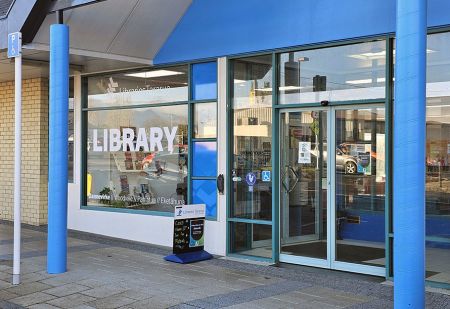
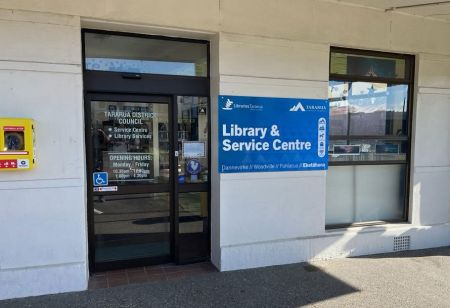
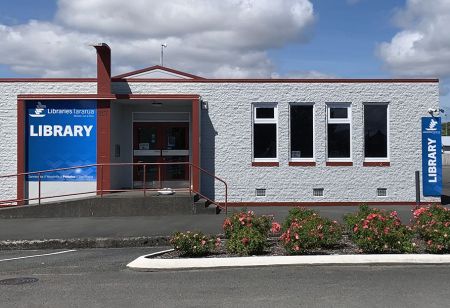
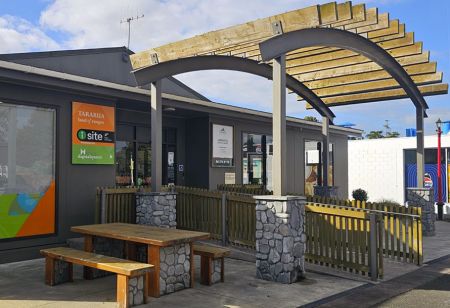
You can access Ancestry for free onsite at any of our four libraries, either on your own device or using one of our computers. It is not accessible from home.
Note: Maori Land Court records can be a good source of family information sometimes, and Whakapapa Māori Charitable Trust – 1,000 years of Whakapapa

Microfilm of these old newspapers can be viewed at Dannevirke Library and Woodville Library; print outs can be made, or saved to usb memory-stick. To access, please ask at front desk.
Dannevirke Library has an alphabetical listing of births, deaths and marriages 1921-1971 compiled from the Dannevirke Evening News, which indicates where to find the original article.
Newspapers: various issues on microfilm (at Dannevirke unless stated otherwise)
| BUSH ADVOCATE | 1901 | |
| WOODVILLE EXAMINER | 1883-1938 (at Woodville Library) | |
| DANNEVIRKE ADVOCATE | 1901-1912 (missing: Jul-Dec 1909 and Jan-Feb 1920) | |
| DANNEVIRKE DAILY PRESS | 1904-1908 | |
DANNEVIRKE EVENING NEWS | 1908- March 2012 (missing: May-Dec 1908, Mar-Apr 1920, Sep-Oct 1933, Jan-Sep 1975, Sep-Oct 1994, Nov-Dec 1994) |
At our Dannevirke branch, we hold various jubilee and anniversary booklets from schools and other institutions, and publications about the history of the area.
The local history collection is not available to borrow, however you can view the items while in the library. Please ask a staff member, or visit our catalogue site to see what is available.
Note: some items in the local history collection are also available in the general collection for loan.
Original photographs are held at Dannevirke Library, and can be viewed while in the library, on request.
Currently they are not available in an online repository, but you can see our (retired) site Online here (scroll through images, not searchable).
The Registrar General's Office registers and maintains New Zealand births, deaths, marriages, civil unions and name change information, and issues certificates and printouts.
You can order a certificate for historical records:
- Birth of a living person who was born 100 years ago or more
- Birth of a deceased person who died 50 years ago or more or who was born 80 years ago or more
- A stillbirth that occurred 50 years ago or more
- Deaths that occurred at least 50 years ago, or the deceased's date of birth was at least 80 years ago
- Marriages that occurred 75 years ago or more
Shipping lists are useful for finding information about passenger and shipping arrivals into New Zealand. There are lists of resources which can be used whether the date and place of arrival is known or unknown.
You may never be able to find out what ship brought your ancestors to New Zealand. Many records no longer exist and many more are not indexed and are not readily accessible. In general, the earlier your ancestor arrived (say before 1875), the more likely it is that you will find a passenger list. After 1900, far fewer lists have survived.
Try these websites first:
- Passenger Shipping Lists
- Immigrant Ships to NZ 1845-1910 (not comprehensive)
- Papers Past Digitised New Zealand newspapers and periodicals.
You might be able to trace your family’s history through records from Australia if they were there first, or if they served in the military.
Māori Land Court
From 1865, the Māori Land Court determined ownership and gave title to land under Māori control. It came to deal with all transactions concerning Māori land. Claimants justified their rights to land by citing, among other information, their genealogy. The genealogical material was often written up verbatim in the land court minutes and these archives have therefore become primary sources of whakapapa. The Waitangi Tribunal now plays a similar role in its recording of genealogies when claims are made before it.
For further information contact the Māori Land Court.
Māori Land Court Minutes Index Database
There is an online database which indexes the majority of Māori Land Court minute books for all Māori Land Court districts in New Zealand from 1865-1910. This was done by librarians in the New Zealand and Pacific Collection at the University of Auckland Library.
- The Māori Land Court Minute Books Index is not a full-text database. It does not include copies of pages from the minute books as images or in text form.
- The database covers all seven Māori Land Court districts: Taitokerau, Waikato-Maniapoto, Tairawhiti, Waiariki, Aotea, Takitimu and Waipounamu.
- Details of the land block, iwi involved, details of the case and whakapapa details of the land owners, as well as name of witnesses present are given.
- There are contemporary Māori Appellate Court decisions and Lower Court reserved decisions.
- Judgments of the Māori Appellate Court from 1993 onwards, and the Māori Land Court from 2010, are available on the Māori Land Court website.
Local Cemetery Records
You can search for records using this tool which covers all the cemeteries in Tararua District, except urupā.
New Zealand Cemetery Records 1800-2007
This database “New Zealand Cemetery Records 1800-2007" can be accessed in a library via Ancestry Library edition. It contains headstone transcripts for cemeteries from around New Zealand.
Archives Central
More than 7,000 items from Tararua District Council's archives, covering 114 years of history, have been catalogued on the Archives Central database. The listed items include minute books, correspondence files, letter books, rate books, electoral roles and accounts and financial records from between 1876 and 1990. The items are the records of various road boards, county councils, town boards, borough councils and two former district councils, all of which over the years have amalgamated to form today's Tararua District Council.
All the surviving council rate books from 1885-1920 have been scanned and added online. These can be viewed as PDFs and provide a wonderful window of who owned what properties during this time. Also available online are an assortment of maps of the various counties and boroughs.
First, gather the information that you already have.
Research principles
Work from the known to the unknown
Starting with yourself, work backwards through each generation.
Interview relatives
Write or talk to family members. Ask them about family names, where the people lived, when and from where they emigrated. Some records may be in family homes: e.g. letters, school yearbooks, wills, photographs, birth, marriage and death certificates.
Write down what you find and whereWhat institution? Which collection of records? What volume and page number? Which microfilm reel? Record the sources searched, even if the results are negative.
Search every possible spellingEspecially of names, including phonetic and typographic errors.
Re-check material already gathered
Clerical errors creep into documents and dates may have been entered incorrectly.
Protecting your pictures
In order to protect your pictures, you could go around the house and secure framed photographs and pictures so that they cannot fall off the wall. A number of different products are available to help you secure these items, such as specially-formulated earthquake wax and putty, and also quake-resistant picture hooks and hanging systems.
Avoid displaying framed photographs in places with a higher exposure to light or heat, such as in direct sunlight or near or above a heating source.
Keep items in the dark — avoid light, moisture and heat
A second step is to house those family papers, photos and material items correctly. The biggest enemies of paper are moisture, light and heat, so storage should be somewhere dry, dark and where the temperature doesn’t vary hugely between hot and cold, and is preferably on the cooler side with good air circulation. Putting boxes of photos in hot, stuffy places such as under the house eaves is not a good idea, as they may crack or fade.
Avoid placing them anywhere that water could flood, such as near hot water cylinders or pipes, or potentially damp places such as basements or garages. Dust is also a potential threat, particularly for photos, so try and keep the storage environment dust-free.
Sort and store
Begin by sorting and assessing your papers. Remove all staples, pins or other metal attachments, as these can rust and damage the paper. You can use plastic-covered paper clips if necessary. Lie all papers flat to avoid wear and tear along fold lines.
If you have important or valuable papers or photos badly damaged by water or heat it may pay to consult a professional paper conservator for advice. Don’t try to mend the items yourself with adhesive tape.
Storing the papers in a folder is better than in an envelope, especially a tight-fitting one that risks causing damage when taking documents in or out. It is important to use archival quality acid-free paper, tissue and cardboard to prevent deterioration of the item, rather than standard home office-type stationery and manila folders which may contain damaging chemicals or acid.
You can use acid-free polypropylene and polyester enclosures and pages. We list suppliers below.
Survival tips
Do not consider laminating any important papers or documents you want to keep long-term as this treatment causes irreversible damage. Use archival standard acid-free cardboard boxes for storage, using acid-free folders or layers of acid-free tissue paper to keep items separate. Remember to label the boxes with details of contents.
Newspaper deteriorates quickly when exposed to light or damp. Keep any newspaper clippings separate from other documents in their own folder or box, and remember to record details of newspaper title, date and page number. You may prefer to photocopy the original as a photocopy will last for longer.
Caring for photographs and negatives
For your photos it is a good idea to record details of time, place, people in the photos, and who took them. If you do want to identify the photos by writing this information on the back, use a soft pencil and write lightly. Colour photographs are more inclined to fade and lose colour, particularly older ones, but black and white photographs will last for longer.
Store photographs in either acid-free paper envelopes or enclosures, or in transparent plastic enclosures made of uncoated polyester, polypropylene or polyethylene. Do not use PVC, and be aware of the possibility of moisture being trapped and causing damage. Acid-free paper is preferable because of its porous nature.
Avoid sealed pages
If you have any photos in albums with self-sealing pages, remove the photos as soon as possible, as this is one of the worst ways to store them. Use an album with acid-free paper and mounting corners, or one with polyethylene pages for clear viewing, or store in acid-free paper or cardboard boxes with acid-free paper dividers. Don’t use glue or adhesive tape to fix in place. Other albums can be left as is, but should be wrapped in acid-free paper or stored in an acid-free box.
Negative storage
It’s a good idea to store negatives in individual sleeves or acid-free paper envelopes to avoid possible damage from negatives rubbing against each other. Do not use plastic enclosures for nitrate or older safety film negatives, but get professional advice on the best way to handle these items.
FamilySearch is the world's largest free genealogy resource. FamilySearch resources help millions of people around the world discover their heritage and connect with family members. FamilySearch is an international nonprofit organization offered completely free.
Your personal information or family information will not be sold to other companies. Information about living family members is kept private. The genealogy of deceased ancestors is shared with others who share the community family lineage.